Research Project
Research Project
The TWS OJ is also financing a research project, supervised by Jana Rose at Hamburg University of Technology in cooperation with IG gesunder Boden e.V. and the Department of Ecological Agricultural Sciences at the University of Kassel.
The aim of the research is to evaluate the practices implemented by the farmers as part of their contractual cooperation with the TWS OJ. The goal is to understand how these practices influence key soil properties—particularly erodibility and water infiltration capacity.
The key practices being studied are:
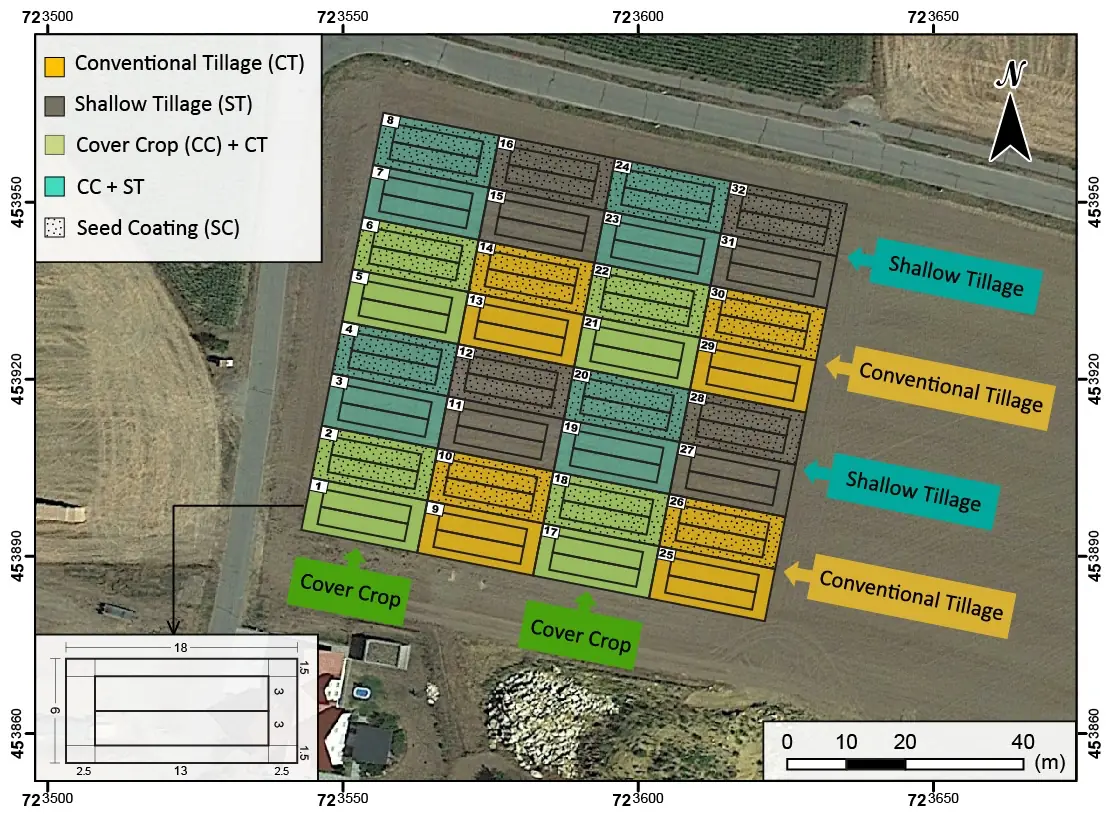
- Shallow tillage vs. conventional tillage: shallow tillage was carried out to a maximum depth of 5 cm, whereas conventional tillage was carried out to a maximum depth of 12–15 cm.
- Cover crop use vs. no cover crop use: a multi-species, legume-focused cover crop blend (4–7 species) was planted on designated plots after the main cash crop was harvested. The cover crops used in the blend included Niger (ramtill), flax, field pea, Egyptian clover, Ethiopian mustard, sorghum–sudangrass, summer vetch, phacelia, black oat, rye, vetch, pea, and winter turnip.
- Inoculation (Seed coating) with microorganisms and soil fungi vs. no seed coating: seeds were coated in a mixture of molasses, milk and compost slurry before being planted in designated plots.
The image below shows the layout of the research site, which includes 32 (18x9 m) plots, each featuring a different combination of these three practices.
To evaluate the impact of these practices, the following tests are conducted directly in the field:
- Double ring infiltration
- Rainfall simulator
- Extended spade diagnosis
- Aggregate stability (aggregates method and quick method)
- Bulk density
- Penetration resistance
Curious to see how the practices are applied and to learn how these tests are performed in the field?
Take a virtual tour of the project site using the interactive image below. Start by clicking the audio button in the top left corner to hear where you are and what you can explore in the scene. Move around by using your mouse, and click on the arrows to switch between the two locations: outside the field and inside the field. Click on the interactive hotspots to watch short videos that show different field practices and soil tests in action. You can explore the tour at your own pace and move between scenes whenever you like.
< Back to TWS OJ Cooperation sectionContinue to Summary and Conclusion section >