The Investigation Procedure
The Investigation Procedure
The Tiered Investigation Approach
The German methodology operates through
progressive verification stages, each building upon the previous one.
At each
stage, authorities decide about necessary further steps based on information
available at that time.
As investigation steps increase in complexity and scope,
so do specific costs and reliability of conclusions.
This stepwise procedure leads
to a more detailed information available at each step, allowing sites with low or no
risks to be excluded from further investigation at an early stage, whereas
acute hazards may demand immediate measures and monitoring. The process typically progresses
through distinct phases, as shown on the diagramm below.
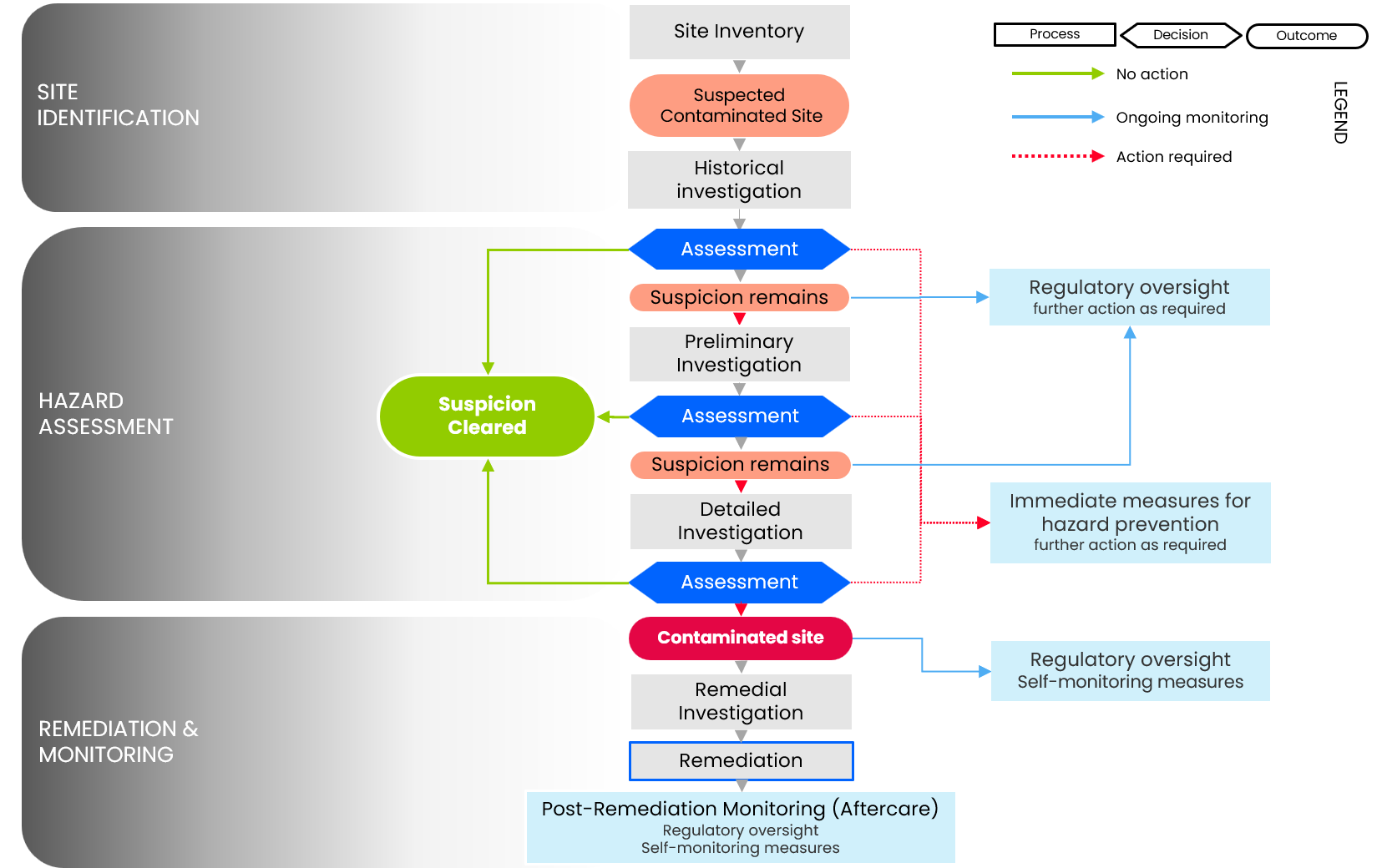
The Tiered Investigation Framework. Figure created by author based on LfULG(2020) Licensed under CC BY-NC-SA 4.0
At each assessment stage, authorities make one of three determinations based on investigation findings and comparison with legally defined trigger and action values:
No action required/suspicision cleared
If contamination is absent or remains below trigger values, the suspicion of
harmful soil change is considered ruled out. The site exits the investigation
process, subject only to documentation and record-keeping requirements. This
outcome, shown by the green pathway in the investigation flowchart, allows
sites with minimal risk to be released from further regulatory oversight at an
early stage.
Ongoing monitoring
When contamination exceeds trigger values but remains below action values, or
when site-specific conditions create uncertainty, authorities may require
continued monitoring under regulatory oversight. Sites in this status are
subject to monitoring, periodic sampling and evaluation, allowing authorities to assess
whether contamination levels are stable, increasing, or decreasing. This response, shown by the blue pathways in the flowchart, recognizes
that not all contamination require immediate active intervention.
Action required
Where action values are exceeded or an acute hazard is identified, authorities
must determine appropriate intervention measures. Depending on site-specific
conditions and the proportionality principle, this may include immediate
protective measures, active remediation, containment
systems, institutional controls, or intensified monitoring. The red pathway in
the flowchart indicates situations in which regulatory action is required to
prevent or manage unacceptable risks to receptors: human health or the environment.